 START A BIT
Young people can make technology, not only use it
Start small, one real step at a time, and understanding and confidence grow. That is the name START A BIT.
Everything we do comes from a few beliefs. From them come our values, what students learn, how they learn, and what we do next. We look at this page again every year, and grow it step by step.
Start small, one real step at a time, and understanding and confidence grow. That is the name START A BIT.
We teach the whole working system: real things that measure, decide and act, with AI inside where it helps. Why we build real things.
AI may help to build, but the know-how stays the student's: they can explain, test and change what they made.
Inclusion is everyone's job. We explain, we do not show off, and quiet students have as much room as loud ones. Our agreement.
We do not promise careers. We promise students who make more of their own technical decisions, build working systems and check their own understanding.
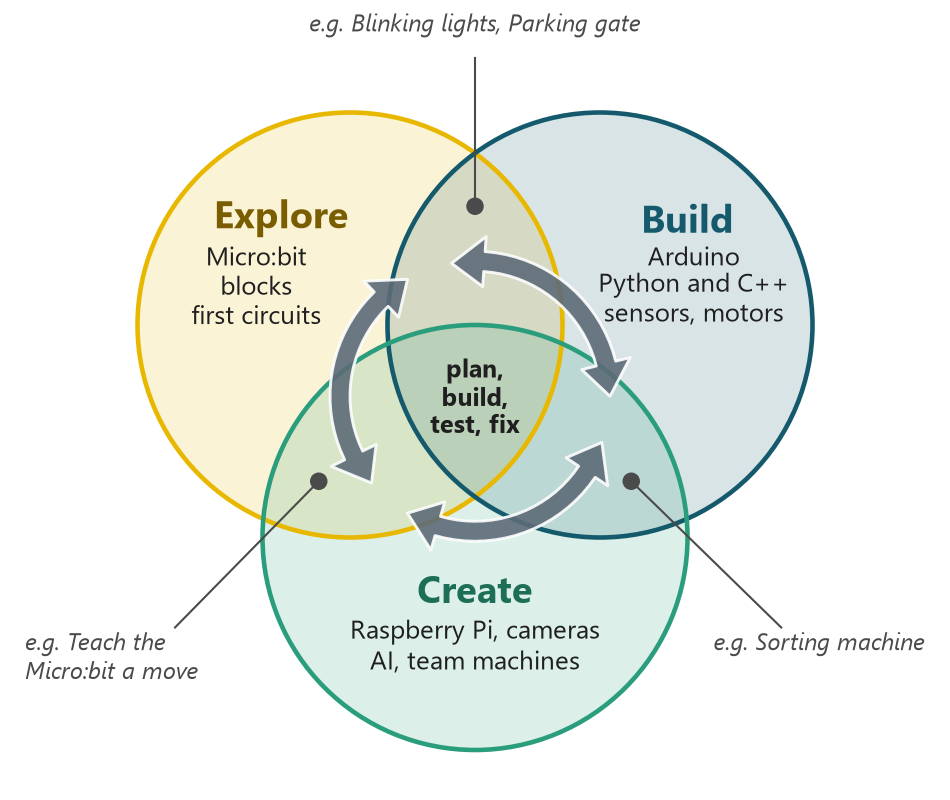
Explore (try and ask), Build (make things that work) and Create (develop your own ideas) overlap. They are not levels to pass: most projects mix them, and students come back to all three.
Students go deeper in each learning area every time they come back to it. Together they build mindset, habits, confidence and know-how, not only skills. The learning map shows them step by step.
We grow with new projects (a digital pet, a windscreen wiper, a robot arm, a sumo robot, an AI car with a camera) and new boards when students are ready. Every year we look again at the boards, the projects and this page, with the students' work and the guides and studies below. The aim stays the same: students who make more decisions, build working systems and check their own understanding.
We keep learning too. These are guides and studies we read and try to follow, so that what students practise here fits what they meet in school, and later at work.
Last looked at: November 2026.